In today's demanding industrial landscape, optimizing every process for performance and cost-effectiveness is paramount. A critical component in achieving this is the use of an Efficient Plate Heat Exchanger. Unlike older, bulkier technologies, modern heat transfer solutions offer remarkable benefits that can transform a facility's operations. The Plate Type Heat Exchanger, in particular, stands out for its innovative design and superior capabilities, providing a smart solution for a wide range of thermal management needs. Let's explore the key advantages that make this technology an indispensable asset.
1. Maximized Heat Exchanger Efficiency
The primary goal of any heat transfer unit is to move thermal energy effectively, and this is where the modern plate heat exchanger truly excels. The secret lies in its uniquely engineered stainless steel plates. These plates often feature a corrugated, herringbone pattern, which is specifically designed to create a turbulent flow of fluids. This turbulence breaks up the boundary layers that can insulate the fluid, dramatically increasing the heat transfer coefficient. The result is a much higher Thermal Efficiency Plate Heat Exchanger, meaning more energy is transferred with less surface area and lower temperature differences, leading to significant energy savings and improved process control.
2. A Remarkably Compact Footprint
Real estate within an industrial facility is always at a premium. Traditional shell-and-tube exchangers can be massive, consuming valuable floor space. The Compact Heat Exchanger design of a plate-based system offers a game-changing alternative. By stacking a series of thin plates together, it provides a very large heat transfer surface area within a very small volume. This high-density design can reduce the required footprint by up to 90% compared to other technologies with the same capacity, freeing up space for other critical equipment and allowing for more flexible plant layouts.
3. Unparalleled Flexibility and Scalability
Industrial processes are not static; they evolve with changing production demands. The modular construction of a plate heat exchanger is one of its most powerful features. This piece of Heat Transfer Equipment can be easily adapted to new requirements. If you need more capacity, you can simply add more plates to the frame. If your process changes, you can reconfigure or remove plates. This scalability ensures that your initial investment continues to pay dividends, as the exchanger can grow and change with your business, avoiding the need for a complete replacement.
4. Simplified Maintenance for Reduced Downtime
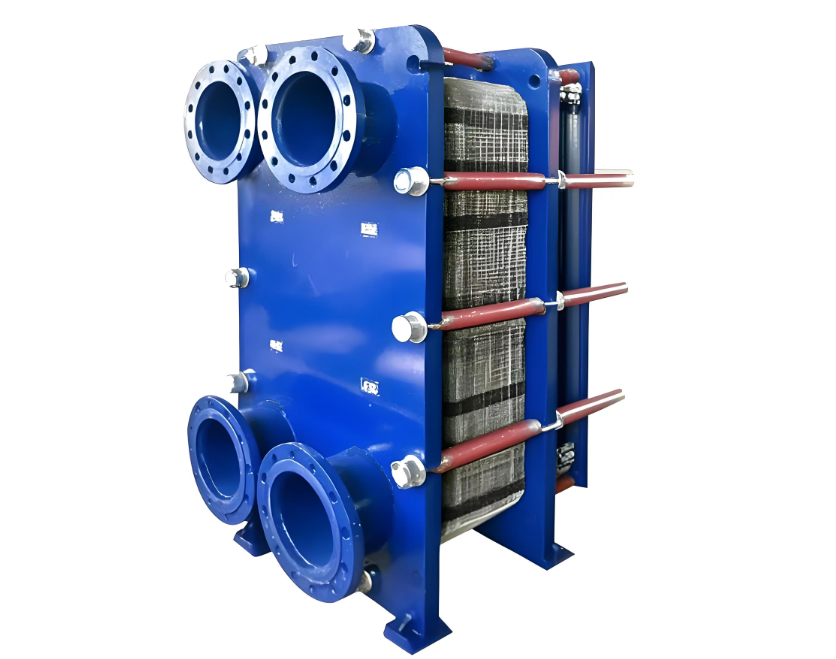
Maintenance is a critical consideration for any Industrial Heat Exchanger, as downtime directly impacts productivity and profitability. The plate heat exchanger is designed for easy serviceability. By simply loosening the tie-bars, the plate pack can be opened, giving full access to every heat transfer surface for inspection and cleaning. Gaskets can be replaced quickly without complex procedures or specialized tools. This straightforward disassembly and reassembly process drastically reduces maintenance time compared to the laborious task of cleaning tube bundles, ensuring your operations are back online as quickly as possible.
5. Robust and Reliable Operation
Durability is non-negotiable in industrial applications. An Efficient Plate Heat Exchanger is built to last, with a robust steel frame providing structural integrity. The high-grade stainless steel plates offer excellent corrosion resistance, while the precision-engineered gasket system ensures a perfect seal, preventing leaks and cross-contamination between fluid circuits. This reliable construction guarantees process integrity and operational safety, making it a trustworthy solution for everything from HVAC systems to sensitive applications in the food processing and chemical industries.