Understanding Plate Heat Exchangers
Plate heat exchangers are pivotal in various industries, offering efficient energy transfer using compact, lightweight designs. These devices leverage metal plates to transfer heat between two fluids, making them a staple for many industrial applications. When designed with high-efficiency corrugated plates, plate heat exchangers provide optimal thermal performance while accommodating diverse operational needs.
Among the many benefits of this equipment is its remarkable ability to adapt to specific requirements. Whether used as pharmaceutical heat exchangers to meet strict hygiene standards or food industry heat exchangers to process delicate goods, plate heat exchangers are incredibly versatile. Their efficiency and customization options make them essential in maintaining safe and reliable heat exchange processes.
Key Features of Plate Heat Exchangers
One of the standout features of plate heat exchangers is their thermal efficiency, which directly impacts energy savings and operational performance. Flow rates can be tailored to match specific requirements, providing the flexibility needed in various sectors, from thermal oil heat exchangers for industrial processes to hygienic heat exchangers for food and pharmaceutical applications.
These systems also cater to industries requiring corrosion-resistant heat exchangers by offering heat transfer plates made from materials like stainless steel, titanium, or specialized nickel alloys. This ensures their durability and efficacy in handling aggressive chemicals or extreme conditions. The gasket options, such as EPDM, NBR, and FKM, further expand their use cases, enabling them to thrive under diverse environments and applications.
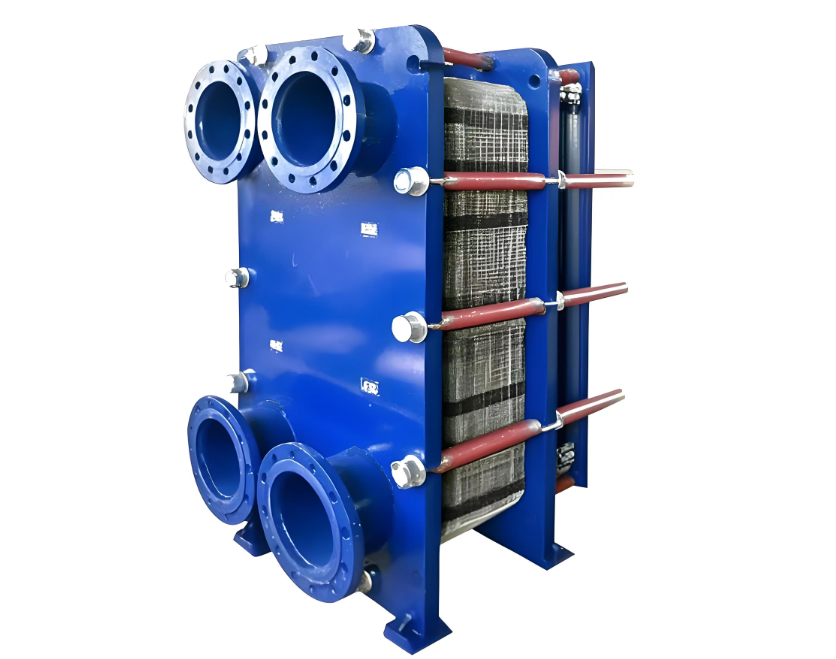
Another key aspect is the modularity of plate heat exchangers. Components such as the frame assembly, support feet, and mounting brackets provide easy installation and maintenance, making them a preferred choice for efficient cooling systems. The availability of advanced configurations like brazed plate heat exchangers and double-wall models makes these exchangers a robust solution for even the most demanding applications.
Applications Across Diverse Sectors
Plate heat exchangers play a vital role in streamlining operations across multiple industries. In the food industry, they ensure product quality and safety by maintaining precise temperature control during processes like pasteurization and beverage cooling. Similarly, pharmaceutical heat exchangers meet stringent sanitary requirements, ensuring the safety and efficacy of products in production environments.
The adoption of thermally optimized designs, such as high-theta or low-theta corrugated plates, expands their applications to suit unique scenarios. For example, high-theta plates offer maximum thermal efficiency, ideal for highly viscous or challenging chemical processes, whereas low-theta plates reduce pressure drops, making them suitable for smoother operations.
Moreover, plate heat exchangers enhance operational sustainability through energy-efficient designs and accessories. Features such as insulation jackets help conserve energy, while sensors facilitate real-time monitoring of temperature and pressure, ensuring seamless performance and reducing energy wastage.
Conclusion
Investing in robust and efficient plate heat exchangers can redefine how industries manage thermal processes. From their remarkable adaptability in handling pharmaceutical and food-grade applications to their advanced materials and customizable designs, these devices offer unparalleled versatility. Whether improving the thermal performance of heat exchangers or ensuring superior durability in corrosive environments, they serve as a cornerstone for efficient cooling systems across various sectors.
Whether you’re an industrial operation looking to enhance energy optimization or a technical application striving for precision, a plate heat exchanger is an indispensable asset. By focusing on quality design and tailored solutions, such heat exchangers align with operational goals and uphold the highest standards of efficiency and reliability, shaping the future of industrial innovation.